If you are considering Chatham as your Hudson Valley home base, the first question is not just whether you like the area. It is which version of Chatham fits your life best. Some buyers are drawn to a walkable village setting with services and culture close at hand, while others want a quieter country property with more land and privacy. This guide will help you sort through that choice, understand the local tradeoffs, and decide whether Chatham aligns with how you want to live. Let’s dive in.
Chatham offers two distinct lifestyles
One of the most important things to know about Chatham is that it functions as both a village and a larger rural town. The Village of Chatham is compact at 1.2 square miles with 1,669 residents, while the Town of Chatham spans 53.2 square miles with 4,104 residents.
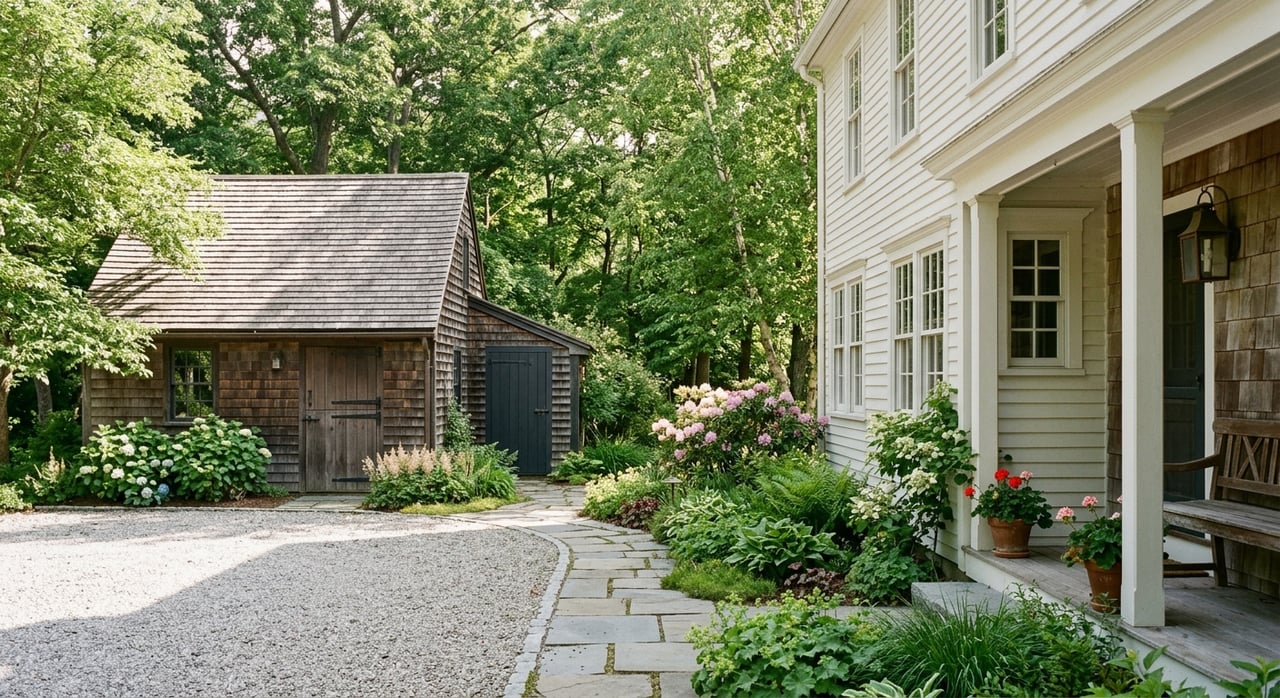
That difference shapes daily life in a very real way. In the village, you have a historic center with Main Street, Park Row, Hudson Avenue, the Crandall Theater, the Mac-Haydn Theater, and restored landmarks like the 1811 House and Union Depot. In the broader town, the landscape shifts toward fields, wooded land, country roads, and larger parcels.
The town’s 2023 comprehensive plan puts numbers to that rural character. It describes 33,500 total acres, with 55% forested land, 21% active or potential farmland, and 58 active farms. If you are looking for a place that still feels tied to its agricultural roots, Chatham clearly leans in that direction.
Village living in Chatham
If you want a more self-contained day-to-day experience, the village may feel like the better fit. The official village website lists services that many small communities do not have in such a concentrated area, including police, fire, water and sewer, public works, and waste management, along with planning and zoning functions.
That matters if convenience is high on your list. A village address may appeal to you if you want to be closer to a civic center, local events, and cultural venues without giving up the smaller-scale feel that draws many people to Columbia County in the first place.
For some buyers, that balance is the whole point. You get a historic setting and a stronger sense of center, rather than a place that feels purely rural or spread out.
Country living in Chatham
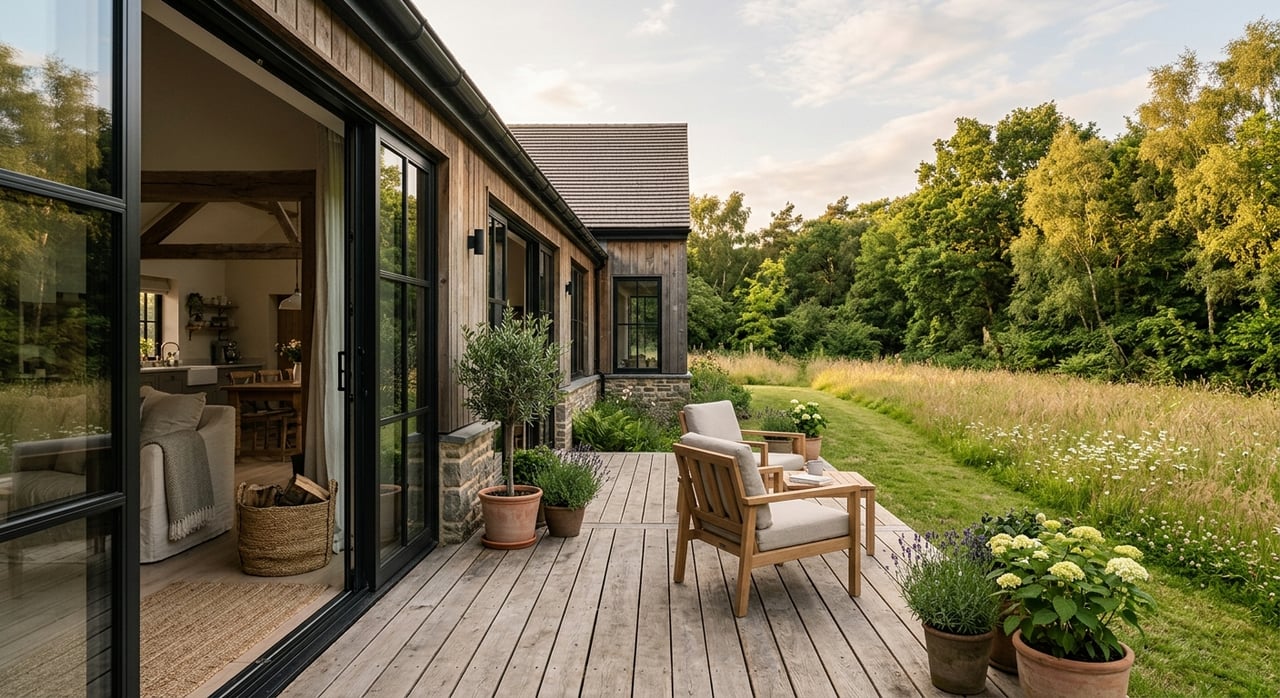
If your priority is space, privacy, or a landscape-driven lifestyle, the town may be more compelling. Outside the village center, Chatham becomes much more rural, with a broader mix of wooded land, farmland, and country roads.
This setting can suit buyers who picture a farmhouse, a larger lot, or simply more distance between homes. It may also appeal to people who want a quieter atmosphere and a property that feels more connected to the natural landscape than to a village core.
That said, the rural setting comes with more due diligence. As you move farther from the center, factors like road access, internet service, and travel time become more important to evaluate address by address.
What daily commuting looks like
For many buyers, Chatham works best when you understand that it is still largely car-oriented. Census-based profiles show average commute times of 22.9 minutes in the village and 27.6 minutes in the town, which suggests many residents are traveling locally or regionally rather than making especially long daily commutes.
Public transit does exist in Columbia County, but it is limited. The Chatham-Hudson bus runs on Tuesdays and Fridays, the Albany Commuter runs Monday through Friday with four round trips along the western part of the county, and the county shopping shuttle serves Hudson and Greenport daily except holidays.
In practical terms, that means transit may be useful in specific cases, but it is not a full substitute for a car for most households. If you are comparing Chatham with a more transit-connected location, this is an area where your lifestyle expectations should stay realistic.
Broadband deserves extra attention
If you work from home full-time or part-time, broadband should be part of your early screening process. The Town of Chatham’s 2023 comprehensive plan notes that improved cell service and broadband were top concerns in local hamlet questionnaires.
The plan also says the town’s broadband committee has helped bring fiber optic service to parts of the town, while additional expansion is still being pursued. That is encouraging, but it also means service can vary depending on the address.
For remote workers, this is one of the clearest examples of why Chatham should be evaluated at the property level, not just the town level. A house that feels perfect on paper may still need a closer look when it comes to internet reliability.
Housing in Chatham at a glance
Housing in Chatham reflects the same village-versus-country split you see in the landscape. Recent ACS 2024 5-year estimates show 929 housing units in the village and 2,241 in the town, with median owner-occupied home values of $323,100 in the village and $358,100 in the town.
Those numbers give you a useful baseline, but they do not tell the whole story. Chatham’s housing stock likely includes period homes and properties near the village center, along with farmhouse and country settings in the broader town. The main takeaway is that your options can look quite different depending on which part of Chatham you explore.
Income data also helps frame the market. Median household income is $79,886 in the village and $107,270 in the town, compared with $81,528 across Columbia County overall.
Affordability is a real local issue
Chatham’s market should also be viewed in the context of wider price pressure across Columbia County. A county housing brief found that the median price of a single-family home rose from $239,000 in 2018 to $379,000 in 2021.
That same report shows affordability pressure for both owners and renters. In Chatham town, owner households were 80.4% affordable, 13.2% unaffordable, and 6.4% severely cost-burdened. For renter households in Chatham town, 46.6% were affordable, 30.1% were unaffordable, and 23.3% were severely cost-burdened.
The village numbers for renters were tighter still. In Chatham village, renter households were 41.3% affordable, 34.9% unaffordable, and 23.8% severely cost-burdened.
The town’s comprehensive plan reinforces that this is not just a market talking point. It specifically calls for more diverse housing types and more affordable options across life stages, with the goal of avoiding the displacement of younger residents and local workers.
Community feel and pace of life
Chatham may be especially appealing if you want a place that feels established and settled. Census profiles place the median age at 49.6 in the village and 52.8 in the town, compared with 39.8 statewide.
That does not define every household, of course, but it does suggest a different rhythm from a fast-growing suburb or a highly transient market. Some buyers see that as a major plus, especially if they are looking for a quieter atmosphere and a stronger sense of continuity.
The village’s cultural anchors also add texture to daily life. The Crandall Theater, the Mac-Haydn Theater, and the historic streetscape all contribute to a community identity that feels more layered than what you might expect from a small place on the map.
What families may want to know
If schools are part of your home search, Chatham Central School District is an important part of the local picture. According to the district, it serves about 900 students from pre-K through grade 12 in three school buildings on Woodbridge Avenue.
The district also operates the Chatham Public Library, which it describes as one of only two public libraries in New York State within a school district. That detail speaks to the town’s civic character and the way education and community life intersect here.
For many buyers, the key is not to assume Chatham feels like every other small-town school community. It has its own scale, pace, and identity, and those qualities are worth experiencing in person.
Who Chatham tends to suit best
Chatham can be an excellent fit if you are looking for one of two things. First, it may suit you if you want a real village center with a visible civic and cultural life. Second, it may suit you if you want a rural Hudson Valley base with land, scenery, and a manageable regional commute.
It tends to work best for buyers who are comfortable making thoughtful tradeoffs. You may gain charm, space, and a stronger connection to the landscape, but you may also need to think more carefully about broadband, transportation, and exactly how close you want to be to the village center.
In that sense, Chatham is not a one-size-fits-all answer. It is a place with genuine variety, and the right fit depends on how you want your home base to function day to day.
If you are weighing Chatham against other Hudson Valley towns, a nuanced local perspective can make the decision much clearer. When you are ready to talk through lifestyle goals, property types, and what part of Chatham may suit you best, connect with Kyle Elizabeth Irwin.
FAQs
Is Chatham, NY more village or rural town?
- Chatham is both: a compact village center of 1.2 square miles within a much larger 53.2-square-mile rural town.
Is Chatham, NY good for remote work?
- It can be, but broadband and cell service should be checked property by property because the town says expansion is still ongoing in some areas.
Is Chatham, NY easy for commuting?
- Average commute times are moderate, but most households will still rely on a car because public transit options are limited.
What is the housing market like in Chatham, NY?
- Housing includes both village-centered homes and rural properties, with recent median owner-occupied values of $323,100 in the village and $358,100 in the town.
Is Chatham, NY a good fit for buyers seeking a quieter lifestyle?
- For many buyers, yes, especially if you want a more established community feel, cultural amenities, and the option of either village convenience or countryside privacy.